

 Apple Podcasts

 Spotify

 Castro

 PocketCasts

 Podchaser
How to be less "Busy & Wrecked" with Dermot Whelan
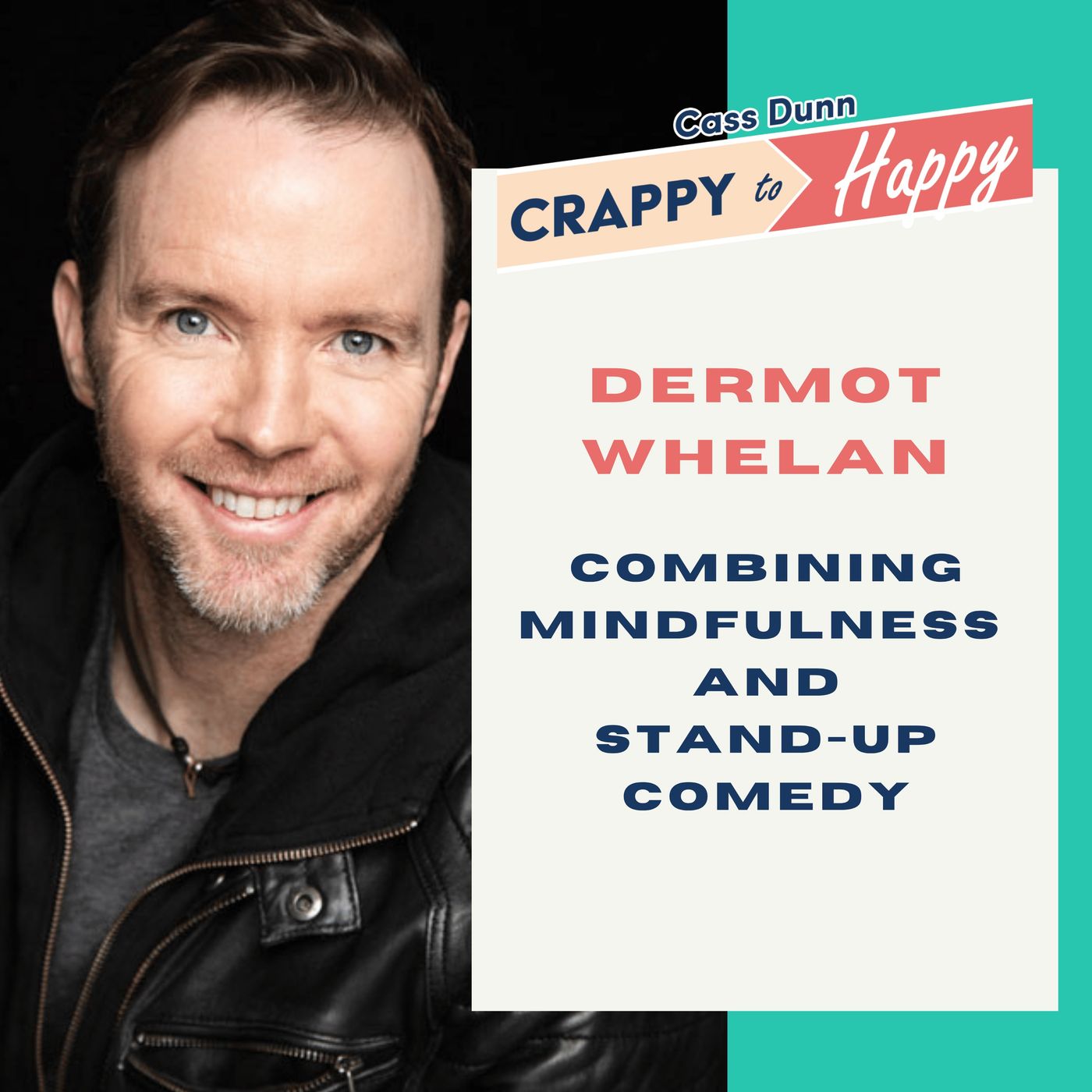
Dermot Whelan was one of Ireland's most successful radio hosts and television presenters for over 20 years. When he had a panic attack on the way to performing at a comedy festival, he decided to put aside his scepticism and explore how meditation could help him manage the stress and anxiety that came along with working in such a fast-paced, high pressure career.
Dermot now combines mindfulness with comedy in a way that allows him to pursue both of his passions while offering audiences a pathway to exploring the benefits of meditation that is light-hearted, realistic and relatable.
Dermot is performing his "Busy and Wrecked" standup show in Sydney, Australia on Friday 28th November.
For tickets and UK/Ireland tour dates, go to https://dermotwhelan.com/tour-dates/
In this conversation, we explore how humour can serve as a powerful tool for connection and healing, and how Dermot's dedication to meditation has improved his personal life and shaped his professional endeavours. With two best-selling books under his belt, Dermot continues to inspire others to embrace mindfulness in their everyday lives, proving that it’s possible to laugh while we navigate the challenges of modern life.
Connect with Dermot:
www.dermotwhelan.com
www.instagram.com/dermotwhelanofficial
Tickets for Busy & Wrecked Tour: https://dermotwhelan.com/tour-dates/
Connect with Cass:
www.cassdunn.com
www.instagram.com/cassdunn_xo
Contact Crappy to Happy:
Email: hello@crappytohappypod.com
www.crappytohappypod.com
www.instagram.com/crappytohappypod
www.tiktok.com/@crappytohappypod
00:00 - Untitled
00:04 - Introduction to Crappy to Happy
01:13 - The Journey into Stand-Up Comedy
12:46 - The Turning Point: Awakening to Mindfulness
20:08 - The Burden of Busyness
28:02 - Navigating Burnout and Finding Fulfillment
45:26 - Navigating the Balance of Productivity and Well-Being
48:14 - Finding Presence in Everyday Life
0:04 This is Crappita Happy and I am your host, Cas Dunn. I'm a clinical and coaching psychologist. I'm mindfulness meditation teacher and of course author of the Crappita Happy books. In this show, I bring you conversations with interesting, inspiring, intelligent people who are experts in their field and who have something of value to share that will help you feel less crappy and more happy. Derbertt Wheeler has had a long and successful career as a radio and TV broadcaster, comedian, public speaker and voiceover artist. For twenty one years, he co hosted the hugely successful Dvermot and Dave Show on Ireland's leading national radio station. He is, in fact, they are, in fact the Irish version of Hamish and Andy. So that is cudos and he's the winner of fifteen IMRO.
1:04 I don't know what that is. I assume it's some Irish, very important Irish awards, national radio awards including Best Music Presenter and Best Music program Now. A few years into Dermott's stand up career, he had a panic attack on his way to a show, and around that time he discovered that meditation really helped him to manage stress and anxiety like many of us, and he'll fill us in on the details. His commitment to meditation did waiver for a time, until eventually he suffered a burnout in twenty seventeen, when he returned with a vengeance and in fact dedicated himself more than ever to meditation and trained to be a meditation teacher. He has since published two books, mind Full in twenty twenty one and just this year, Busy and Wrecked. Dermott, now, I find this fascinating, combines his love of comedy and performing with his love of meditation and well being. And if this sounds like something that might be of interest to you, than good news. He is taking his stand up show Busy and Ragged to Australia this coming November.
2:08 Dermott, welcome to crappy to have you. Thank you so much, Cas, I'm so excited to be here. I'm a big fan of yours. Thank you, Thank you. Now, Dermott. In the time that we have, I won't ask you to tell me your whole personal history, but you did come to stand up and radio quite late, relatively speaking compared to one other people my start, because you studied archaeology first. Yeah, that was so useful. Right, it's such a natural progression, I mind, the archaeology pathway. Well, you said, I was only yesterday playing the new Indiana Jones video game with my daughter, she's fourteen, and we like those kind of exploration games, and it was Raiders of the Last Darc that lit up something in me and I wanted to be Indiana Jones. And very quickly into my archaeology career, I realized it's nothing like Indiana Jones, especially in Ireland, where you're just sitting in a wet ditch for eight hours a day.
3:07 Yeah right, Yeah, But even though you had that diversion for a time there, were you always drawn to perform? Like were you always the class clown? Did you sort of have that in you? Yeah? I think so, and I think you know, you can usually spot a future performer if they're an ultra boy or girl. And in Ireland, I don't know if it's the same in Australia, but generally speaking, you know, if I grew up in a rural area, so the only stage in town was the altar pretty much, you know, it's Sunday mass so if you can get up on there, they had their own wardrobe, department. You know, you got things to do, props, et cetera. So I guess, you know, I definitely had a desire to get up in front of people from an early age. And I guess I was I was a small kid. I was very shy, quite nervous, and I identified, particularly in you know, in secondary school, in high school, that humor was something that could get me out of sticky situations. Yeah, you know, and my own meditation teacher, and I know you talk about this yourself in your books, but you know, he referred to it as your winning formula. You know, at that early age, we we we find our winning formula, the things that work for us in particularly in social situations, and for me as a teenager, you know, making people laugh,
4:38 I realize, And you remember little moments. I remember somebody saying, you know, hey, leave him alone, he's funny. Really yeah, And I remember and right that in that moment, I guess it was programmed that, you know, humor was always going to be an important tool. To me social capital. Yeah, yeah, I think so. And I guess you know we've all been through. I'm sure if you think back to your own childhood, there's certain strengths are certain personality traits that you lean do to, you know, to create those connections and get over anxiety or stress with things like that. For sure, humor was a big one for me too, comes up very highly on my VA strengths, which we were talking about before the show. Yeah, stand up. So you say that you're quite a shy and anxious kid.
5:23 I can't think of anything more terrifying. I mean, people rate public speaking as more scary than dying, you know, and as even as public speaking goes, stand up comedy strikes me as probably one of the most terrifying things to do. I'm just interested to know, well, was it terrifying for you? But also just like what is that kind of emotional for me? Like roller coaster? Like what is the emotional experience of doing stand up? Yeah, it's a funny one. And you know what, the more comedians I meet and all the comics I've met over the years, we all most of shared that sort of trait where we're introverts and would have anxiety in certain social situations, but yet at the same time we do the thing that seems to be completely at odds with our natural state, and that's get up in front of people, you know, when we know it affects us.
6:17 You know, people's reactions to it affect us more than your average person, you know. And maybe some of your listeners can relate to that. Maybe they find themselves in their jobs or you know, in a corporate setting put their hands up for roles or presentation giving or whatever, when they part of them inside is going, what are you doing? Are you crazy? You know? And I've put a lot of thought into it, and I was like, what is the thing that drives us to get up onto that stage and put ourselves at that kind of social risk? And you know, you've spoken about flow state in your books, and I think that I think there's lots of reasons, but I think one of them is that on stage, when you're performing, it doesn't happen every time, but a lot of the time flow state can happen. And in that state, as you know, the self critical voice, either the volume gets turned way down or it shuts the hell up altogether. So even though on paper from the outside it can look terrifying, and often it is, particularly if it doesn't go right, but there are those moments where it does go right and you feel that connection with the audience, you feel the connection to your own strengths, your own sense of humor, and you hit that sense of flow and that's a magical state. And once you get it once, just like any extreme sport, I guess you just want to get back up there and do it again.
7:43 Yeah, you know, like a bit of it like a dopamine hit. Is it like adrenaline rush? It's I think it's everything. Yeah. In fact, I did a parachute jump one time for charity with a comedian Palamne, and when we, you know, reach the ground after we'd stopped screaming, both of us looked at each other and went, oh my god, that was amazing. Stand up is scarier, you know. So I think it has adrenaline and dopamine and all those things, and I think, as well, that's I guess one of the traps. One of the cliches about comedians or performers in general that a lot of them have addiction issues, because what do you do when you come off stage and you're that high and you hear people saying, you know, I just you know, if I don't do something to come down off that, if I don't have a few beers or whatever it is, I can't get to sleep or you know, so I think that's you know, one of the potential downfalls obviously is that you're dealing with very extreme highs and lows, and if you it's very easy to reach for unhealthy things to try and manage those.
8:48 Yeah, and that goes for obviously specifically in that situation, but a lot of people would relate to that. You also got into radio, and in the interest of Tom, I won't get you to tell the whole getting into radio story, but live radio is also live radio and comedy. These are two things that are really two jobs that really where you subject yourself to fairly intense public scrutiny, you know, and I think particularly my podcast network in Australia was owned by the biggest radio network in Australia. So while I did a podcast, I was kind of adjacent to radio. And I'm very aware of this. The you know, it's all about the ratings and the audience, and people just lose their jobs overnight. They're they're not performing, they're out and I'm just wondering for you, how did you cope or in hindsight, you know, especially in those early days. How did you cope with that kind of scrutiny and pressure.
9:49 I just sort of grinned and bared it. In fact, all the people, the consultants who were brought in to give out to me and Dave who I did my show with all those years, were generally Australian. Yeah, because Australia was and still is seen as the home of creative radio, and this is where a lot of the big radio and TV shows have come from, you know, the big formats and things. So I was always used to being given out to in an Australian accident. In the early years of radio, I started a news actually, and I remember in the early days as a newsreader, I didn't really know anything about current affairs. I just again thought I was going to fling myself in there.
10:32 I was always a good mimic, so I could do an impression of a newsreader, and I could do quite a good newsreader voice, particularly when I watched things like Sky News, where people talk in that weird way that nobody does a normal life, and they leave big gaps between their words. So I was able to do a reportery newsreader voice, and so I got the job. So they gave you a niche job. They gave me an job. Yeah, and then I just sort of winged it from there. But I do remember having I guess, looking back now, what would be panic attacks on the air, where my throat used to kind of close up and my voice would sort of turn quite worryingly yoda ish. So I had to step out of the booth and then went out to become a reporter.
11:18 And you know, I guess sometimes it's funny now and I think, why didn't I think there was anything wrong? I just didn't. I just thought, well, that was weird. You know, well, I'll just find another way to do it. You know, I think there's a lot more awareness now in conversations anyway about anxiety. So that was kind of the very early naughties, and nobody was particularly talking about mindfulness, right, you know, anxiety or anything like that. No, they weren't. No, So you had a panic attack which you had never experienced before, and that was kind of a turning point for you. Yeah. I was driving down to perform at a comedy festival, which was a big break for me, and I was really excited, and I guess it was kind of indicative of that state of mind that I was in, and I guess sometimes we all can fall into sometimes, is that, you know, I had one foot on the accelerator in terms of I'm going after this. You know, I was rising the ranks and stand up comedy pretty quickly, and it was all going great. But then it was like my other foot was on the break, going You're going to fail. This is terrible. They'll find you out. You're not a real comedian. You're a radio guide, you know.
12:24 And I guess that sort of little civil war that was always going in my mind just peaked at this particular time because you know, I was using alcohol as my way of navigating stress and trying to keep my nervous system at bay, and we all know that doesn't particularly work too well as a long term heal strategy, our stress management tool. Yeah, And I remember just I had to stop the car, pulled it over. I felt like there was somebody like literally sitting on me, and I thought I was dying. I had never had anything that acute before and thought I couldn't breathe. I was gasping for air, and I thought that's it. I'm going to die here on the side of the road. In a very unromantic place called Moulinavat, which is, you know, you don't have to know to know what it's like.
13:10 You don't want to end your legacy there, you know, outside of Bungalow on this you know, near a roundabout, and I remember the ambulance came and I got on that and they said it's okay, you're not dying. And they gave me a very important piece of life saving equipment, which was a brown paper bag, and I breathed into that. I don't think it was an official, you know, health service brown paper bag because it definitely smelt of ham sandwiches. But I was wondering, was the driver of the ambulance like rubbing mustard off his face here? Give them that. But yeah, that kind of I guess woke me up, you know, to the fact that, Okay, if I'm gonna want to take on all these exciting challenges, I'm going to have to find ways of managing the stress that these challenges bring. So quite by accident, I met a lady who just asked me to mc her book launch just to welcome people to it. She'd just written a novel, and I found out that she was teaching meditation to the Irish police Force, and I was like, really, really, I was very cynical about the whole meditation thing. I thought it was for It was very Californian, you know, and just for people who naturally look good in linen, you know, particularly white linen. You know, you google meditations always people of white linen, and I think, you know, as Irish people, we can't wear that. It just looked like there's too many freckles. We look like we're in our pajamas or yeah, or were very impractical for a
14:41 wet Irish winter. Yeah, we just looked like we've escaped from over a high wall, which we shouldn't from somewhere we shouldn't have. But I quickly realized that actually, no, this stuff, you know, because she was using it with law enforcement. I was like, Okay, I think you're going to have to drop some of the cynicism. Maybe an you need to do something. So yeah, I started and got great benefits from it. Yeah, well that's what I'm interested to know. Now, what did you notice? What did you notice in you? And I guess what did other people notice around you when you started meditating? Well it's a bit kind of like when you start going to the gym, are working out, isn't it. You know, a lot of the time, it's not you that notices necessarily first, it's other people see it in you. And it was actually my wife, Karina. She said, have you noticed how patient you are with the kids at bedtime?
15:32 Because they were quite small, and you know kids small kids' bedtime can be a sort of a stress peak, you know, in the day if you've had a long and stressful day and they're running around it won't do what you want them to do, and you're thinking, I just want to sit on the couch and zone out. And I guess I probably had been sort of rushing through that and using my dad voice quite a lot. Come on, I've gone on her pajamas. But she notices that you're really patient, now, you know. So I was like really, She's like, yeah, you're totally different. And when I look, I was like, I am. You know, not only was I not rushing through it, you know, I was savoring it. I didn't want them to go to sleep because we were having fun, you know. Yeah. So and you know, the more I thought about that, in hindsight, I was like, you know, I think a lot of our lives, particularly for caught up in business and stress, we can not only take those moments for granted, but I actually missed them. You know. They're the golden moments.
16:34 You know, if we're on our deathbed, these are the things we'll be thinking about, you know. We won't be sort of reaching out our frail hand to the person at the side of the bed and go, I wish I'd made more teams calls. I've wasted my life, you know. No, we're thinking how was I with the people I care about the most. That's kind of it, really, you know, so it can seem you know, I wasn't a terrible for before this. It wasn't. If my wife was saying, well done, Dermott, you haven't hit the kids in twenty minutes. This meditation is really working for you. She was just noticing that. I guess I was more present, and I was more patient, and I was more myself, you know, but I guess other things improved my sleep. That was always an issue generally for me. Either I felt like I just couldn't get enough of it, or I was and I did do breakfast radio. So that kind of comes with the territory. But that waking up in the middle of the night, that three am, little beautiful holiday we take at nighttime. You know, we're just also in the ceiling. We go, great, what'll we worry about now for the next three hours till the arm goes up, So, yeah, I'm asleep. Improved my patience, my creativity, you know in the radio studio and stuff like that, So a lot of things improved.
17:52 Yeah, I noticed that too when I started to meditate. I just noticed I was calmer, less reactive to things that would have normally, I know, I would have irritated me. I was like, it's just a bit of you know, it was a subtle thing. But obviously now I know more, and as you do too, you know about the science of why that happens. But I think also when you're saying about how these are the moments to savor, like you actually have to slow down enough to just have that realization because we're usually just so busy, like we're just so with the doing and the onto the next thing and the next thing, and I've got this other thing to do and that thing's due, and this is all just an inconvenience to me. It's only when you actually give yourself that space, isn't it to slow down? Yeah, that you get that perspective.
18:35 Yeah, you know, I called my book busy and wrecked because they were the two words that I kept hearing from people. I don't know if saying I'm wrecked is a particularly Irish way of saying you're exhausted. Yeah it is. It rcked. I think Rector is kind of drunk in Australia. I have to audience will be able to tell me a. Lot of works. Yeah, both ways. But yeah, people, I just I started to know is the chronic busyness in people's conversations and how our conversations had changed because for me, you know the way it used to be. You know, you say to someone how are you, and you would say, I'm fine, thanks, how are you? But I sort of noticed as soon as you ask somebody how are you, oh my god, don't talk to me. I'm so busy.
19:20 I'm crazy busy, I'm swamped, I'm slammed, I don't know whether I'm coming or going to chase my tail. And then there will be a kind of a pause as you know, they realized, Okay, all of that sounds really unhinged, and I have no time management skills and I've completely lost the run of myself. And that I noticed that we would they would throw in the classic phrase, but you know, good busy, so it would be busyness rant moment of realization, but good busy. And I became fascinated about that, and I wonder how many of your listeners and viewers have used that phrase? Maybe even today our engaged in a busyness tirade, and I was going, why are we doing that? Because I realized I was doing it too, So I started to become kind of mildly obsessed with looking into busyness, and I began to wonder, like, is good busy real Is it a thing that we you know? Is it an excuse or like a sticking plaster that we just stick on when we realize actually, our life is my life is operating at a pace I'm not comfortable with. But because I seem to have chosen all those things, then it must be good busy.
20:36 You know, our is good busy somewhere that we can aspire to reach, where yes, we chase our dreams and we go after all the things that we want to do, and we feel a bit of stress, and we feel that turbulence, but it's not at the expense of the people and things that really matter for us. So that kind of set me on the trajectory of the book and the live show. And yeah, but I began to realize that actually the world has changed an awful lot in terms of how we celebrate business. Yea. You know, there's an interesting study from lots of studies, but mostly from Columbia University in the States as a a woman called Sylvia Berletto. It has done a load of work on our perception of busyness and the reward that we seem to get from it are to you know, the importance that we give it. And what they found was, you know, when we engage in those little that little merry busyness dance in conversations, I'll tell you how busy I am, and then you come back telling me how much more busy you are. That what we're doing is actually raising our social importance. We're raising our social value.
21:48 And the less time we can demonstrate that we have for our personal lives, the more we work, the more we can demonstrate that we use tech to multitask that you know, if we can have something visible on our around us that demonstrates multitasking, that this also elevates our social importance. So this is like what we're doing, like two little birds in the wild flicking their busy feathers. We're saying, look, how important I am. I have a heart rate of one hundred and seventy five. I haven't put my kids to bed in four weeks because I haven't been home, and I was so exhausted this morning. I call the bus driver mommy. But you know what, it's all good, busy yay. You know, you're like, yeah, that sounds like a fantastic nervous breakdown you're having yourself.
22:30 How do I get one? You know? Yeah? So yeah, that's the little the merry dance we do. You know. They even did studies on They did a study on Super Bowl lads and how our perception of success has changed in recent decades. So they looked like the eighties and nineties and rich people in the Super Bowl ads were on yachts, you know, just looking out to see while you know, staff on the boat ran around doing the work. Are it's someone lounging that classic image of someone lying by a pool and the waiter comes along with the tray of drinks and oh yes, thank you James. You know, fast forward to more recent decades are like this decade, and you know, the teens or whatever we call them, the Super Bowl ads have changed in terms of the definition of wealth and success. Now instead of somebody engaged in leisurely activities, they're running from a boardroom on the phone, jumping into the limo, heading to the airport to get onto the private jet.
23:31 Really interesting. Yeah, So the idea of success and wealth and you know, following your dreams is very much caught up in rushing and doing and getting after it and maximizing your potential. And anything you know, particularly rest is to be you know, sneered at because it's not particularly productive. Yeah, and that just brings up so much like because on the flip side, if you're not busy, how that then impacts people's sense of their own self worth. You know, people have this sort of existential dread if they're not busy or doing something all of the time. Yeah. But it's even interesting if you watch how we throw it out not only as something to boost our own importance obviously, you know, subconsciously we're doing it, but we offer it as a compliment. And it's something I noticed in recent years, because two years ago this week, actually I left my perfectly good, well paid radio job to do what I'm doing now, mixed out up comedy and meditation, and so for the first time in my working life, I was just doing one thing at a time, and I was sitting down to write my book, and that was my job for three months or whatever it was.
24:48 Usually I would have been doing it on top of fifty other things. And so people would look at my social media and just because social media always makes you look very productive and busy, and they'd say, oh my god, you did so great. You're you're so busy, and I would go, I'm not, actually, I'm not busy at all. I'm actually focusing on just one thing, just writing a book in the end of my garden. And they wouldn't know what to say. They would just want the ground to open up. It would kill the conversation. The next time somebody goes, so, how are you getting on You're busy? Just go no, no, I just ate Dorito's for seven hours. That's all I did today. It's we kept we don't know what to do with it because you by you saying I'm not busy, it just throws everything, of course, but no busy is good. You know, are you sick or what? You know? Is there some we don't know what to do? You know?
25:44 Yeah? So interesting? Yeah. Can we just go back a bit too, Can we go back a bit to the burnout? Because you started, you learned the meditation, it was really helpful to you. Then fast forward how long until all that all came undone and you got back into it. I'm just curious about that time. Yeah. I think I got into meditation around twenty eleven and then was fairly solid at it, probably up until about twenty fourteen or fifteen. I got a big the radio job, got a bit more high profile. We've switched radio stations, whatever, and so I got into the work. And then we did a live version of our radio show, you know, the stage version, which we took on tour as well.
26:30 And I was doing all kinds of other things and bits of TV as well at the time, and I just had let the the meditation go because it's just the most human thing, isn't it that we do? You know, we go, we finally find something that really works for us, and we go see that thing, see that thing I was doing that changed my life. I'm never doing it again. It's like I'll take it from here, thank you very much, you know. And sure enough the stress started to creep back in, and it actually culminated in a day where I was I just felt all wrong. I was exhausted. The thought of just answering emails or having a conversation or doing anything just seemed insurmountable. And I remember I just took myself to my doctor because I thought, just go to your GP, as we say in Ireland, Yeah, to just go there. And I remember I sat down from this lovely woman and she was like sort of finishing off whatever she was doing, and she turned to me she said, so what can we do for you today?
27:31 And I burst into tears. It's sat there and I'm not a crier, you know. I cry maybe a rugby matches if my team Monster you know, won or haven't one. But I suddenly was having one of those kind of shoulder shaking big releases. And after about ninety seconds, which is quite a long time to cry in front of a stranger, I was like, oh my god, I'm so sorry. I think I just think I'm completely overwhelmed. I think I'm burnt out, this thing that burnout. I think this is it and I'll never forget what she said to me. She said, with a lot of kindness, me too, I'm completely burnt out. And I was like what.
28:16 It? Yeah? I was like, really are you? And She's like, no, I have like a whole lot of patients out there. I don't know how I'm going to get through the day. And I was like, I don't know what does say to her? After a while, I just said, have you tried exercise? Do you want me to write you a prescription? Really? Yeah? So she was completely at the end of her teather as well. So the two of us were just these two burnt out humans sitting like we are now going what do we do? And you know what, like I realized in that moment, this is where we are. This is where the business has brought us. You know, even particularly people like yourself, you know people who's calling you know, who've dedicated their lives to helping other people's that's the mission. Like this doctor I was sitting with, you know, she was completely burnt out A lot of time there, I'm not suggesting you are, but you know that prof you know, people who give a lot in their profession. This is how can they help us if that's how they're feeling. That's what I was thinking, you know.
29:22 So yeah, I charge her eighty five year own totally to come back in a week. Things didn't improve. So at that point, I said, you know what you can keep you know, just flinging, losing yourself in busyness and drinking pints of the weekend and hoping it'll all be fine. Are you can lean into the thing that the one thing that you know has worked for you. So I decided I would just do the teacher training just to really focus myself and apply myself and with no intention of ever becoming a teacher. But then it just sort of after that. I trained with a lovely guy called David G's, California based, so ironically, I did train in California with a load of hippies and did the whole crystal thing. But obviously what I liked is that he came at it from the scientific side and the you know, the more eastern traditional way of looking at it. And I liked the merging of those two things because I think you can. You know, the more people, more types of people you can relate to, the more the chance to have of finding something helpful in it, you know.
30:33 And for years that it felt like I had these two sides to myself. I had this sort of quiet, introvert, spiritual, you know, deeper part of me, and then I had a look at me jazz hands shouty man on the radio, and I thought, how am I ever going to make these two? You know, it was like having two sets of friends out of dinner party and You're like, how am I going to get these people to talk to each other? And I guess it just sort of happened, you know what happened. It happened in one particular week, and it ties into a lot of things that you talk about in your work in terms of, you know, finding those things that light that fire in your belly, and that we change over time, and that things that did excite us in the past or that we you know, might may not necessarily be right for us nowadays. And you encourage people to, you know, to constantly check in with themselves and say what's important to me now? And have my values change and all that. But it was a beautiful demonstration of what you talk about In that I did a comedy gig in the three Arena as a venue in Dublin with Dave and that should have been like the pinnacle of my you know, the of my career, of everything that I'd worked towards. This was an arena comedy gig. Incredible, and I remember driving over and I was like, h you know, I wonder what's for dinner. And then two days later I gave a meditation talk to thirty slightly interested people in an insurance
32:05 company about a half a mile from that arena, and I came out of it like high fiving, you know, the world. I was like, oh my god, that was incredible. You know, I think I reached one person. The thousands in the in the arena didn't matter. It was how interesting it was reaching that. And I when I thought about why is this happening? I think for me it represents that the word fulfillment, which we hear about a lot but kind of you know, sometimes feel like we're never reaching it. When we can bring you know, as many parts of ourselves to the table in one go, it feels fulfilling, you know. It ties into the strengths subject, which you talk about so well that when we're bringing more of our strengths to something, it feels exciting, It feels easy, it feels it doesn't mean that it's it's not a challenge, but it just feels more. It just lights that fire, doesn't it.
33:11 Definitely, Definitely that's so interesting. Had you felt like you've obviously you went off and you did the meditation teacher training and that was a big part of your life while you were still doing the radio. It sounds like it was a kind of gradual before that came that full immersion to what you're doing now, because even just to be doing an insurance gig, somebody had to hire you. So had you been talking about it, putting yourself out there as a teacher, like, how did that go? I think I'm trying to remember. It's one of those things that just when you look by you think, I think it just sort of happened. Well. No, I definitely remember sitting in I Win, my agent's office and saying saying to them, sitting in a chair like this, going I don't want to do my big radio show anymore. I think I want to teach meditation to people. And I want to try and make it a bit funny. And they were like interesting, They're like, we've worked so hard to put you where you are and get you the TV gigs and get you these a little because I was doing a lot of corporate work at that time, but it was all sort of song and dance MC kind of stuff, and so they were like in fairnism, they were like, Okay, this is a pivot. Let's see what we can do with this.
34:33 And as it turned out, when we started to look into it, a lot of companies were really looking for, you know, that kind of content to help their staff navigate stress and feel engaged with their work and all that, but they were actually looking for it in a different way, and so it didn't seem too barmy then, and so I guess opportunities started to open up. And then I ended up writing Mindful out of frustration because I couldn't find a book on meditation that had a sense of humor, you know, or the one that I could relate to that was written by someone a bit like me, you know, just kind of regular Joe, you know, dad, whatever. That a lot of it was very academic, are very maybe too far down the spiritual scale for me. And so then when the book connected with people thankfully, I thought, well, you know, what would be so cool to just do what I'm doing in companies and with the book and bring that to stages just for everybody, and try and do this thing that I've dreamed of doing, blending those two sides. And we blend that stand up comedy and the meditation part. And so my show looks like my story told through comedy. And actually that's quite really good therapy because you're picking out all these points in your life that could be you know, traumatic the small team maybe, and once you kind of you know, put it through
36:06 the comedy lens, it diffuses them. It kind of takes away their power a bit, you know, And I guess people can relate to the kinds of things I'm talking about. Then I have a I guess it's like a funny ted talk with a you know, a slide show and just explaining what I'm talking about and a bit of the science behind what I'm talking about that I've enjoyed discovering over the last decade or so. And then the last part is I take them through some techniques. So it's this beautiful kind of energetic flow where people are roaring their heads off laughing one minute and then you see them sitting in blissful silence the next and it's I shed it here the first time it happened after So when I looked an audience, I was like, oh my god, this is what I've dreamed of. This is this is just probably the most powerful thing I've seen where you can you can see people at the beginning of the night that are resistant, you know, because I say, there's two people that come to my gigs. There there's the group who are up for it. You know. My show is are comedy meditation transformation. So there's people that come to my show who are ready to be transformed, and then there are people who are dragged there by people who are sick of their shit, and they fall into each category, you know. So I might see at the start of the show, you know, someone sitting there like,
37:37 what's this? You know, because people come and they don't quite know what to expect, and you think you're not going to get me with your woo woo fluffy. You know, I thought you were funny on the radio. But you know, I do this as a favor to my wife and then you see them, you know, towards the end of the show, and you see them open their eyes after trying a technique, and so wow, something's shifted there, you know. And I really think that humor can be an amazing tool for opening up people's minds, putting them at ease, you know, because I was really resistant. I still am resistant to a lot of things in the meditation wellness space.
38:21 I think it takes itself really seriously a lot of the time. It's one of the things that I love about the stuff that you do. You bring that sense of humor to it, and you know, like if you google meditation, you're going to see it's always really beautiful people in you know, three hundred dollars Lulu Lemon yok pants, sitting somewhere where you will never live. You know. It's always on top of a mountain that just you know, for years I thought you couldn't distress at heights below three thousand feet. Apparently you can, you know, or else the famous the wooden jetty, you know, the woman at the end of the jetty perfect, you know, sitting with perfect makeup. And I always that's definitely not Ireland where I grew up, because if it was that wooden jetty would be so rotten from constant drizzle that that woman would have drowned, it would have collapsed, you know. So you know, part of my mission, if I have one, is to is to say, okay, that's that's one aspect of it, and that works for some people. But meditation or stress management or destressing or finding peace or finding space or feeling less busy doesn't have to look like that.
39:32 You know. It can happen when you're sitting in your car, or it can be on you know, for me, my two seater reclining couch from having Norman. You know, if you google meditation, you're not going to see a picture of my couch. You'll see a lot of mountaintops, you know, and beautiful people. But it really is, you know, wherever you can find it. And it doesn't have to take all day, because I think as people are like, I know, I need something to help me manage stress or to you know, feel like I have a few more minutes in the day, but I don't have the time. Yeah, you know, and I'm sure you hear people say, I just I just don't have the time, and they're afraid logically that you're going to hand them something that's going to be another hour. You know. Yeah, you need to get up at four am, and you know, you need to sit in a position where it feels like your knee cartilage is weeping, okay, and you need to clear your mind of all thoughts. You know, that's the other those kinds of things. We've eighty thousand dollars a day.
40:35 We're not going to do that. You know, we don't have to do it. You can start where you're at, and if all you have in the day is the length of one conscious breath, start there. You know. I'm in the middle of an interview and I just brought my cortisol levels down there for a second. So that's kind of where I'm coming from with it. Yeah, and I think you're right. I think that it's so refreshing what you're doing, because there is either that very we're all spiritual and we're in we're going to India or where, you know, wearing lots of white linen, sitting at an ash room for a month. On the other side, once there was the science behind it, this is what I noticed. Once there was some science there to support it, and people cottoned on that this was great for stress reduction. Then it almost became corporatized, like it became commodified, and it was it was almost to the point of, you know, I get up at four am and I do my my what do you call those ice plunges, and my journaling and my five kilometer run and my meditate but all with that striving, achieving, making self care another thing to do, like another box to tick. And this is where I'm at now with this. When I'm talking to people, it's like, can we just take the striving and the achieving out of the wellness?
42:05 Like can we just let ourselves just be? Like? How about that? How about just like you're enough, just take a breath? Like how about that be? Yeah? And you don't have to film yourself meditating either. Interestingly enough, it still works if you don't put it on Instagram. Yeah. How present are you when you're sitting in the perfect lotus position? Going? Is it recording? Yeah? Right? Is this my good side? Oh god, my head, the window is blowing my hair. But you see that both of those approaches, like both of those angles are going to turn people off, So coming at it with like with the humor, and with the realistic like what it actually is and what it looks like. I think that's a really great way to get people who might have been turned off by any of those other messages about meditation.
42:55 Plus, I think, you know, if you are a high achiever and you have a tendency to beat yourself up in your head, it's always very easy to take something like meditation and then use it as another stick to beat yourself. Enough, my mind wandered all over the place there. I can't even meditate properly, you know. And I think you see that a lot in the corporate space as well, with words like resilience and things. It's like, you know, you're just not being resilient enough. You know. You can imagine I think again in Indiana Jones reference, you know, in the Temple of Doom, where there's all those kids working down the mines underground, you know, and if it was, if it was these days, they'd bring someone like me or you in there. Go just give them an hour of mindfulness, right, That's what it is.
43:45 Yeah, it's interesting, It is interesting, JOm. And I'm really conscious of the time I could talk to you all day literally, But where is your Tell people where they can find out more about your show in Australia, because this will be obviously beaming to my audience, who are predominantly Australian. They're all still down Under and they'll be very excited to hear the details. Yeah, well I can. I just I cannot wait to get back to Australia and to be doing a show there. It's really as a dream come true. It's been I guess it's been on my mental vision board for quite some time. I have a brother who's lived in Sydney all his life. I've got relations there and lots of friends as well, so I can't wait to just get over it. It's November Friday, November twenty eighth in the Pado RSL in Sydney, and yeah, please come along. Tell you if you're listening and you want to see I guess something like meditation delivered in a completely different way.
44:46 Or if you've got that friend you know that you're sick of their shit, then drag them along. I'll take good care of them. And yeah, I'd love people to come along and enjoy the show. Yeah, well done for for achieving that. That that fusion of both sides of you, because you're right, it's the That's the only way to live, really, isn't it. The more you can bring your whole self to anything that you do and not feel like you're split apart, that's what success is. Yeah, and you know it's thank you. You're very kind to say that. But I'm still learning this whole self employed game, you know, and the you know, I talk about productivity theater in my book Busy and Recked, and it was something that was alien to me actually until I stopped working in a full time job for someone else, and I found it manifested from me as walking around with my laptop bag everywhere. Like I would be out with the kids my laptop of my shoulder, going for coffee, Better bring the laptop. And one day I was going to the movies, I was like, where's my laptop? I was like, what are you doing? Like like I really, I was basically demonstrating to my inner task master that I'm not slacking off. I'm being productive. I could check an email at any moment, like what did I think was going to happen in the cinema? You know that the productivity police were going to kick open the door and go. You know, everyone gets your laptops out. This is a team's call, you know, but I think we
46:17 we all. I guess you must have experienced that, you know, with the many wonderful jobs that you do, that you know the in our internal boss can be stricter than any real boss that we've ever had. Yeah. We leave the corporate job for all the freedom of flexibility so I can work my own hours and end up working like more hours for less money. Typically I know, more stress. I never feel like you could turn off. Yeah, yeah, I was even I start on the way here that like eighty percent of people who work for themselves at work weekends absolutely you know, and work on average more of like sixty hours a week, but you're you're constantly making yourself available. So what's been wonderful is that I've really had to examine my own behavior and practice.
47:05 What I'm trying to share with people through the book and the shows and things is to really protect and value the space in between. You don't have to stop doing the things. I don't buy into this. Hey you should want to be working four hours a week? Really? Okay? You fine, Okay, but it's not going to work for me, but at least notice and value those spaces between the things that you have to do, because that's where recovery lives. That's where real resilience starts to grow if when we start to really appreciate and be present in those spaces, you know, because I think a lot of the time I call it in the book, I call it blind seeing because we're there, we're physically there, but we're not actually engage with that. We're not seeing the experience are the people, you know, And it manifested from me. One day, I was just sitting at the kitchen table at my laptop and my wife came in and she was carrying shopping bags and putting them down on the kitchen counter.
48:14 I was tapping away, and it was probably about three minutes into a conversation, and I realized, you haven't looked up since she came in. I had a sense that she came in and literally, this is the woman I care about most in the world, who has just brought food and nourishing things into the house for me and our kids, and I hadn't even given her a look, never mind my full attention. So I remember I closed down the laptop and I looked up at her, and she looked stunning. I'm sure she probably felt bedraggled and exhausted, and I thought she just looked so And I got up and I walked over and I just gave her a hug, and I could feel in that moment both of us are bodies like just soften. And from that little moment, I know that the trajectory of both our days changed, the trajectory of the evening changed of how we interacted with each other and our children and whoever else came into our environment. And that wasn't a big massive thing. I didn't have to do a training course or go to an ashram or suddenly blow up my job or anything else. That was just one moment of blind seeing that I was open to correcting and just being present. Now, look, if you ask my wife, am I like that all the time? Am I just walking around in some kind of blisted out, you know, romantic
49:45 vision of presence? No? But I guess it was one of those moments that I think we can all relate to, in that there are gifts in these spaces. Yes, you might be having a busy day, you might have a lot of things to do. You might be wor working three jobs because you have to. I'm not saying take the afternoon off or work part time or because the world is expensive, and you know, we have PlayStation Plus and Wi Fi to pay for according to my teenagers, but it's how we are in those little unromantic, like unglamorous spaces in our life. And if you just start there. So if you meet your best pal for a conversation, that you just put the phone into the handbag or the wall or the pocket or whatever, and that you listen. If it's your favorite song is playing, listen to the favorite song.
50:42 If you've got your dog with you, just be with the dog. You know, I write bench into my diary because I have to ring fence time again. It doesn't sound glamorous, but I go down to where I live, into the my local harbor, and I just sit on the bench for twenty minutes and I look at fishing boats and I drink my coffee and I just try and make those little, as I say, on glamorous moments of space, just give them the importance they deserve, and then your world doesn't seem so busy. That is a perfect message to finish on. Everybody can take away that message as they go on with their day.
51:28 Thank you so much, Dmitt for your time. This has been amazing. I would love to have you back on another time, but thank you for taking the time today. Thanks Gus, and keep up the amazing work. And I'm delighted you're enjoying your lifestyle in the UK. Good for you. That's brave. Yeah, that's brave. Did bravery come up in your list of strengths when you did your test? No, I don't think bravery is very high on mine. I get kindness, compassion, humor. I don't even look. I should go back and have a look at what my strengths are. Everybody listen. I'm gonna put the link to the VIA strengths in the show notes because everybody should take the VIA strengths. Yeah. It's a great little tip that I picked up from your podcast and I did it while I was in the airport and it was fantastic, really insightful. It's because it just kind of reassures you as well. You're like, oh, I am on the right path.
52:17 That is me. Yeah, that feels that feels right. The world can be making us feel like we're not quite on the right path, that we're not moving in the right direction. We should be doing all these other crazy things. So it's nice to get a bit of h that is me. Good, well done me. I was just watching the time because we're out of here at too and we've got one minute to go. It's been great. Thank you, Thanks Avidon cas see you all in Australia. Yeah. Crapy to Haby is created and produced by me Castan. If you enjoy the show, please hit the follow button wherever you listen to ensure you never miss an episode. Share with a friend to get me in with more loveliness, and I would love you to leave a five star rating and review. Thank you so much for being here and I cannot wait to catch you next week for another fabulous episode of Crappy to Happy