

 Apple Podcasts

 Spotify

 Castro

 PocketCasts

 Podchaser
Why diets don't work
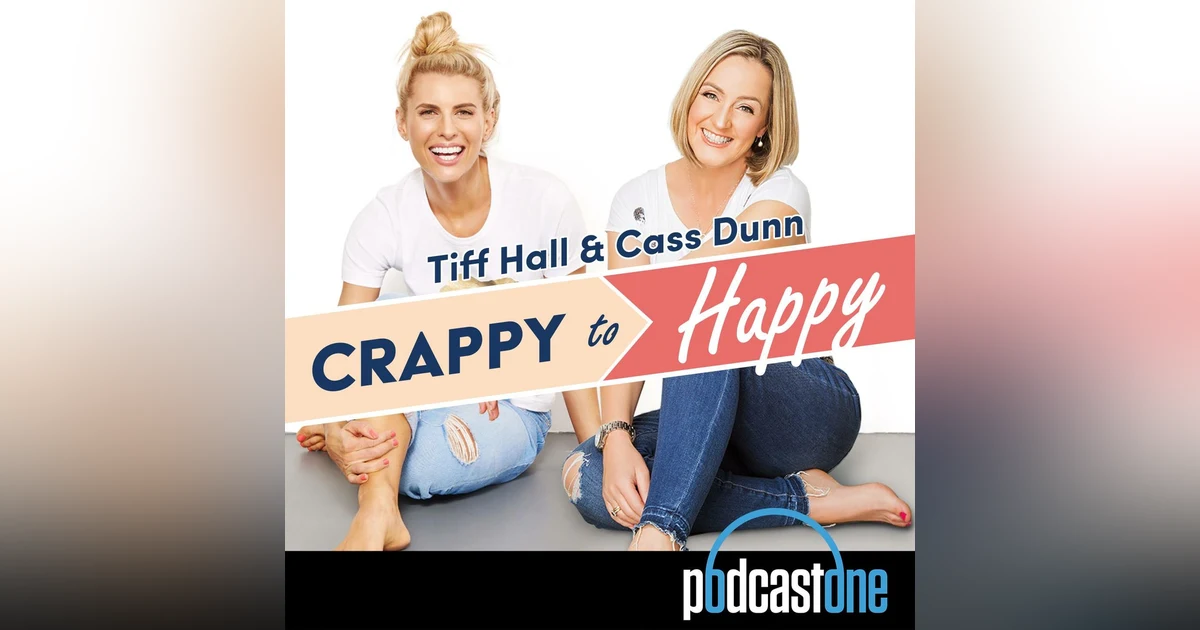

Tiff Hall and Cass Dunn explore the ways dieting is bad news for your body AND your mind.
Tiff spills the dirt on the fad diets shes seen as a Biggest Loser trainer and also the ones she's tried herself! Learn how dieting is counter-productive to your health and fitness goals and get practical tips for managing your weight and optimising your health. Cass delves into the psychology of deprivation and the yo-yo dieting effect that is your biggest weight loss enemy.
Connect with Cass:
www.cassdunn.com
www.instagram.com/cassdunn_xo
Contact Crappy to Happy:
Email: hello@crappytohappypod.com
www.crappytohappypod.com
www.instagram.com/crappytohappypod
www.tiktok.com/@crappytohappypod
Are you a coach, therapist, service provider or solopreneur struggling with self-doubt and imposter syndrome? I'd love to talk to you! (for market research purposes only!)
Book a call with me to share your experience.
Want more great content and less ads?
Upgrade to Paid in the Spotify or Apple podcasts App to get immediate access to "Beyond Happy", the subscriber only podcast featuring bonus content, meditations and more!
0:02 A listener production. Hi, Welcome to Crappy to Happy with Tip and Casts. In this series, we're going to look at ways we can help you to go from feeling crappy to really happy. In the last episode, we talked about the cult are busy and how you can overcome it. In this episode, we're going to tackle dieting, why it doesn't work and what actually does work. Casts initial thoughts, Way to feel crappy? Oh yeah, exactly. We're always on a diet, aren't we. We actually really are. Statistically well, do you know what the stats are and how many people are on diet.
0:46 It's a little bit scary. I know for women that an average woman spends seventeen years of her life on a diet and tries an average of two diets a year. Two a year. And I can tell you that after five diets, which is really not out of reach from the average woman, there are definite links to anxiety and depression. Absolutely starting is really bad for you. And I also read that for the fifth year in a row, young Australians have rated body image as one of their top three concerns in Mission Australia's National Youth Survey. So you know, people are worried about how they look, feeling bluff, feeling crappy, and they're going to these quick fixes, magic potions and pills and thinking change will happen overnight, and then feeling depressed when it doesn't happen.
1:35 To be clear, So what are we talking about with diet. We're talking about basically restricting our calorie intake, right m are we also talking here about very specific approaches to eating. You know, the are we talking about the palia or the. You know, I'm talking about all of it. I'm talking about perhaps you've seen some magic pants that have I don't know, some chemi in them that releases into your skin to burn fat. Are No, I've tried them. I'm talking caffeine pants. I'm talking about. People who I've met, and I've had thousands of students, thousands of clients, and many many contestants on the Biggest Loser I've worked with, some of which who ate.
2:20 Tissues to feel full. Oh my, I'm talking about long runs as fasting. I mean, I was a gladiator. I've even won a bodybuilding competition. So I did a restrictive protein diet or a diuretic diet. So we're going to talk about it all today. So let's talk about why so many of us are on a diet or drawn to dieting. So, first of all, we've got a society that celebrates thinners, like our culture values particularly women for being thin, for being a particular ideal body shape. Yes, often unattainable. Absolutely. You know that message gets reinforced to us through media, social media, Instagram, celebrity culture. We're bombarded with images every day of what this ideal body looks like and them wrapped around that.
3:07 We have this multi billion dollar dieting industry, so people making buckets of money, big business selling quick fix, fad weight loss promises, promises so that we all think that we have some chance of achieving this idea which is going to make us the holy grail of happiness and. Yeah, I'll be happy when I'm a size eight exactly, Yeah, exactly. So we understand kind of why it happens, But what we want to talk about is why it doesn't work and what's all that is wrong with this. It comes back to the mindset, doesn't it. Yeah, it does. It's the psychology of it. And it's a really interesting point because like the tension here as I see it, is that we also have a whole lot of obesity, and.
3:53 So it's never been bigger. So we've got this obesity epidemic and being told that we actually need to lose weight for our health because of the junk food and the and the sedentary lifestyles that we are all living. But then we're trying to tackle this problem with these extreme methods, this extreme unsustainable kind of methods, and so it's like somewhere in there there's this I understand why people are confused, and I understand why there's sort of this like, but we it's almost took. It's a good thing to want to be healthy and to be fitted, but it's it's what drives the psychology of that and how you go about achieving that in a sustainable way. I think we want to talk.
4:37 About We do want to talk about that, and so cass. If we know that healthy eating and healthy amounts of movement work, why do you think people choose a diet over that. Well, that's because we live in a microwave society and we all just want the instant, the instant, overnight results. That's really massive in our culture. Yeah, how can we do that instant instant gratification. We live very much in that society and so we want the instant results. But what that does to our brain? Actually, I'm really fascinated by this. Tell us so we live, So what happens, you know, when we start restricting our food intake, So we become obsessed with food, like we actually become really preoccupied with food and eating.
5:24 You can't have something that's all you want. You create this like deprivation effect, which results in a bounce back the binge like you know, the binge eating. There's some fascinating studies done between diets and non dieters. Now, let's when we talk about dieters versus non dis Most of the female population, I think it's fair to say would be a part of the dieting population. I think seventy that's seventy. And as young as eight years old. Yeah, I've read that as well. It's frightening. It's frightening. So seventy five percent I read of healthy weight women still wish that they weighed less. And no, sorry, seventy five percent of women wish they weighed less, including sixty eight percent of healthy weight women and twenty two percent of underweight women, so even those of us who are in a healthy weight range, because we're aspiring to this unrealistic ideal and seeing these, you know, photoshopped images.
6:18 And they are photoshopped, you're glad to just add ten years of working in the media on television, magazine shoots, been on covers of magazines. Every single image you see out there has been touched, and it has to be touched. And what's freaky geeky now is we're on Instagram and it's an image world and there are apps that will bring your hips in, make your boot teger, widening your teeth, and it's as easy as just the pinch of the fingertips and you can really play and mess with those images. It's amazing. You know, I've had it, but yeah, it's really bad. And I've had moments where my first job in television was in an athletic role as a gladiator many many years ago of gladiators, and I showed up on billboards.
7:03 They had an image of me and I was in you know, athletic gear and boxing boxes like boots, and it was pretty cool image. But my dad rang me and he said, Tiffany because I had to move into State to do the filming. Have they given you a boob job? He said? And I was so embarrassed because I've never had big boobs, and they had enlarged my breast from an A cup to a double D they photoshopped and my father was beside himself and it was photoshoppedved. They've removed scars from my knees, from knee recos and beauty spots and things that you just why can't I have a scar from when I you know, I had an ACL reconstruction because I was in a fight, you know, doing taekwondo, and I was proud of the scar, you know. So you've got to understand from the outset, everything you see in the media world is not real.
7:53 Yeah. And the thing is, though, like we're not stupid. I think we actually know that, but we still can't help the fact that this is what we present, what we're bombarded with every day. So at a subconscious level, we have formed this idea of what is normal or what is acceptable or you know. So I think intellectually we get that that's not real, but it still is having an impact, Like it's still having an impact on our self perception. On our self image, you know, how we feel about ourselves compared to this perfect kind of ideal. It really makes us fall into that trap of thinking foods are either good or they're bad. And you know what I hate about that. So I always hear this one as a personal trainer. Carbs are bad. I can't eat carbs and lose weight and normal program of course you eat carbs like they're very important. There are different types of carbohydrates, but they're very important for glucose, for your brain, very important. And then I hear foods are good and bad, and then it sort of leaks into people feeling, well, I'm good or bad, like I've been good today, I've been bad today.
9:01 I think this is such a great point. I was going to say the same thing. It is almost that we have a moral obligation to be thin or to be a particular body shape, and we have this whole i've been good or this food's bad. The whole language we use around language, dude, and the language we use around eat food behavior is it's just has such a negative impact on how we perceive ourselves and how we perceive you know, food. So what I was saying before, you know, you start restricting calories, you start saying, okayll just eat less, and then suddenly your brain becomes completely focused on food, and then you start doing these things like binge eating, and you know, having that rebound effect.
9:45 And then what we know, and you'd know more about this than I would, is that because dieting slows your metabolism, as soon as you go back to normal eating. You immediately putting society. You have to actually sustain a lower caloric intake to maintain in the same body shape that you were before. Yep, So it can never last. It can never last. And we'll go. I'll talk you through howatically it affects your metabolism and your lean body mass. But with the language cast the good the bad. I wanted to ask, did you grow up with. People dieting around you? Like? Yeah, as you've got it. You've got a daughter, Like how much is that in influence? Yes, so I grew up. I have to apologize to my mum right now, dub her straight in. But my mum was a chronic diet and that's that's the curious what did she try? That's the household that I grew up in. I can remember the grapefruit diet, Yeah, big one.
10:40 I remember the Beverly Hills diet. I remember. My mother was a smoker actually and couldn't. It was reluctant to stop smoking because smoking kept her skinny. Oh that's something that I deal with still with clients. Yeah, and because if she wasn't smoking, she'd put on weight and then she'd be She would say to me, then then I'll just be cranking. You don't want me to be cranky, So when you're run that, I stay smoking and be skinny. So these are the messages that I grew up with. And you know, through no fault of her, she was a product of the society she lived in as well. Yes, but these are the messages that we know. I was dieting. Would have to have been dieting from when I was a teenager. I would have to have been. And I'm definitely one of those people who has I'm definitely in that statistic of being constantly unhappy with my own body weight, no matter how much of a healthy weight I have ever been. And it's so funny when you look back over your life and like, now I can sit here and go, oh, you, it'd be nice to be five kilos lighter. I guarantee you that when I was five kilos lighter, I wish I was two kilo's lighter.
11:42 That's it. That's it. You're never happy with that happy. So you know, rating your confidence and your self esteem by a number on the scale, is that going to work? Cast Absolutely not. But it is a hard habit to break, and I think we need to acknowledge that it is a really difficult habit to break. These messages are programmed in. And what I want to probably talk about too, is that we the way to approach this, Like any GP, any nutritionist, even you will say, well, just eat healthy food, just eat healthy food. And it's almost like, but that runs so counter to everything every other message that I've received and everything that I've ever learned, and it's actually not that simple. And our default is to then get self critical. I think self criticism is the last thing we want to you know, it's the last we want people to experience, is getting down on themselves because they they're trapped in this diet cycle. You know. I think we're all much more about and what we are so about with TIFEXO is getting back to self compassion and getting back to self acceptance and you know, moving our whole mindset back towards self care and self almost like self nurturance, because this whole critical punitive a you know, punishment kind of mentality of diety.
13:05 Punishment. It's about deprivation and exercises punishment. And how's that? Then? Then you hate yourself Thinn, whereas we're trying to tell you if you love yourself. Healthy, yes you'll look at the best. You've ever looked. And I always say to people, do you feel good on that diet? I feel like crap? Yeah, Well shouldn't it feel good to look good? No? No, it's I feel good when I I feel good when i'mm good. And it's the when. And you said something to one of our members which has just stuck with me because we're in this selfie culture. Everyone take a picture to take a picture, and so you know, self conscious all the time, and you said selfies, the only selfie you need is self love.
13:47 That's self love. Yeah, feel the love. It's a changer. It's a game changer, Yeah, it is. It's a mental it's a fundamental mindset shift. So talk us through Cass why it doesn't work psychologically deprivation. Why wouldn't just cutting carbs And I've done it myself. And don't sit there thinking you're a purpose personal trainer. You look healthy, blah blah blah. You've never been on a diet, Tip, I've been on every diet because I wanted to experiment for my contestants. And also I work in the media, guys, so there's been times where I've had to go on TV in white lycra in front of two million people. So don't think I'm having a huge bowl of pass of the night before the camera's roll.
14:28 I have also cut things out and you know, been a victim of being self conscious and. Trying quick fixes. Yeah. I think that's really good that you acknowledged that, because they we do because you are the epitome of fit, Like we look at you and the images are our Yeah, and you're fit and healthy and active and well, Tip's got it all together. TIF would never. Young twenties, young twenties. In my teens, even I. Spent so much money. I wasted so much money on fat zapping. There was a thing where they got a hot it looked like an iron using light to zap your fat till a doctor told me that I had seven layers of skin and how was I going to get down seven layers of skin to you know, get to the fat, and that I was wasting my money and I would burn myself if I was using light to zap fat. And it was like seven hundred dollars a session, you know, in my teenage years, that was I was working so.
15:25 Hard teaching body pump classes. And then I would still do that because I was always in front of people and very. Self concious, self conscious. It didn't work, like you know, it's that's what we're talking about today. And I will go into why it doesn't work metabolically, but psychologically deprivation it can't work, can it? No, it really it can't work. And I actually read a study. It was back during the Korean War when men who were conscient just objectors to going to being conscripted to war, agreed to participate in this study. So these are normal men, healthy weight range, you know, no issues with body, you know, obsession anything like that, and they forced them into a really really strict calorie limited diet for a period of three months. And what they found was these men became obsessed with food, started engaging all of this secretive eating, binge eating, and also when they after the three months of the program, when they started to allow them to eat more normally again, they started becoming obsessed with putting on weight and actually wanting to put themselves back onto a diet when they had never had an issue with weight or body image before.
16:39 So it's almost like the process of dieting changes our psychology so that it shifts the focus onto weight and you know, food and body consciousness, and which sustains long after the diet's finished. It's like we're our whole thinking about food changes. Changes your mind, and the diet changes your mind. But the diet also trains your body to store fat exactly, and that's what people don't understand. Metabolically, it is the worst thing you can do. And if you want to lose weight, tighten up, tone up, be fit, it's all about how fast your metabolism is. So if you have tried a diet, for example, you've cut out all carbohydrates and you say it worked, I lost tapes of weight in that first week. Maybe it was five six kilos, okay, But my question to you is what kind of weight.
17:25 Did you lose? Did you lose did you lose fat? No. For every calorie of carbohydrate that you eat, you store three grams of water. So if you cut out the carbohydrate, you're going to lose a lot of water weight. But as soon as you start drinking, you're going to put that water weight back on. So it is very. Seductive to try these diets because you can get quick results, but you're not losing fat. And then you get the bounce back, and you get the. Bounce back and you get what's called skinny fat because you are depriving your body of calories, so it starts to burn precious must. For every kiler of muscle that you have, you burn up to four hundred calories just at rest, just sitting around. So if you are losing muscle, you're slowing down your metabolism. And what you want to actually do is swap fat in your body because it fat takes up three four times a space of lean muscle mass for muscle, which is metabolic, which speeds up your metabolism, which is tight tone and shrinks and brings your waist in. It's really important. So diets do not work long term. They train your body to store fat, so that's why diets don't work for your brain and your body. After the break, we're going to come back and talk about how you can have a healthy relationship with food. Welcome back to Crappy the Happy with tip and casts. We've been talking about dining and we've talked a lot about why diets don't work, and now we're going to give you some tips on what does so
18:55 cass Where do we start? I think that the first step has to be starting with this self compassion, self love, self acceptance. So you know, if we go back to that stat that even up to seventy percent of women in a healthy weight range still perceive themselves to need to lose weight or want to lose weight, then we need to start taking a step back and saying, are we really being realistic in our expectations and we are buying into this myth that we're being sold that we have to achieve some ideal beauty standard to be acceptable and worthwhile. And you know, from there we all of our choices become based on a more you know, just a more nourishing, nurturing kind of psychological approach as opposed to this punishment approach that I need to fix myself somehow to be a better person or more acceptable.
19:50 Coming from clothing instead. Of yeah, like we've all got this amazing body that we're moving around the world with, you know, for many of us, you know, we're having babies, growing a baby. We can move and run and you know, and we just are not appreciating what's right here. And I think that when you just need to start from really simply to get back more of the self compassion and away from the self criticism that we're all. You know, we spend a lot of time criticizing ourselves. And we'll talk about that in another episode. Actually we have. A heavy focus on self criticism, and I think we need to move to deliberate self acceptance and self compassion. Sounds more sustainable to me. And I think scrapping the word dietly important and replacing it with the word lifestyle and thinking this is going to be long term. No one's going to lose five kilos overnight. You physiologically can't.
20:42 Do that, so not without serious damage to your mind and body. No, and there's a few relationships in our lives that the longest relationships will ever have. You know. Boyfriends come and go, but your relationship with yourself and your relationship with food are going to hang around, aren't they. And I think you know if you approach something as a lifestyle, which is the whole the whole reason I created tifxo dot com was to create a lifestyle pull people away from dieting. And one of the things I encourage our members to do cast is to get off the scales. Throw them in the bin. We throw them in the bin. We throw them in the bin. And the best way to log your progress is through before and after photos and measuring yourself because as you train and you get fitter and you feel stronger, you're going to put on a lean body mass. You're not going to look like the Hulk, but you're going to get definition and muscle weighs a little bit more than fat, and you're going to change your body composition.
21:42 So true, And I love that we are liberating women from the scales and we are doing that. And the other thing I love about what we do on tfxo dot com, now that you mention it is our non scale victories. So the wins that women are having and men that are around self confidence or they go for that job, going for a job, that they didn't think that they would get. They're conquering, climbing mountains and achieving all of these things that have got nothing to do. With doing a push up on their toes for the first time. You know, and we celebrate the non scale victories. It's so important, and you've got to think bigger than a diet. You've got to think about the language and what you're passing on to your daughters. I don't know what's in my stomach at the moment, a little boy or a little girl, but you know, I want them to have a healthy relationship with food too, and keeping it holistic and focused on a lifestyle.
22:31 This all goes back to what we talked about in the last episode about how we're so busy. We feel as if we're too busy for all of the things that are important to us in life. And you know, oftentimes bat poor eating habits are attached to this idea that I'm to I don't have time to all the time cook. We do hear it all the time, don't we. But if we come back to what's fundamentally most important, spending time cooking healthy, nutritious food can be. Really it's a love it it's fun. It can be beauty that you deal with your mind sensory experience. And hey, cooking at home can be fast food. Our recipes on tiffecso can be five to ten minutes. Whip it up, I mean yeah. And it's an important, really important message to our kids too, about that whole importance of cooking and enjoying food and appreciating yeah, and eating together.
23:19 I think that's great. And it does come back to you're not too busy. It's about your priorities. It's nourishing your family. It's a huge when talking about deprivation and feeling guilty if you have something off the diet and then you might chuck in the towel and you'll just go off the diet completely because you've messed up the day having a chocolate biscuit with a cup of tea at. Ten o'clock so all the time. Yeah, you've only been on the diet for a couple. Of hours, had a bikie. Now I'm just going to have fast food for lunch. Is it is it me that stuffed up cass? Like I feel bad? This is another big trap of the whole diet kind of approach. It comes back to this all or nothing thinking that drives a lot of this and this perfectionist thinking which we'll be talking about in the next episode, which drives a lot of the diet behavior. So what we know is that people who are depriving themselves of certain foods or trying to stick to a very rigid food eating plan, they what happens is if they kind of go off plan even a little bit, there's this rebound effect where they sort of go, oh, well, I've stuffed it up completely. I might as well just eat the whole packet of timpling. You'll have one tim tam.
24:29 I'll eat the whole packet of tim tams. Why, and then I've pretty much stuffed up today, So I might as well just wait and start next Monday. You know, Monday never comes. We'll start next week. That is a week that never comes. So, you know, it's this idea that of you know, losing that perfectionist all or nothing attitude and sticking to you know, the eighty percent of the time, if I'm just doing you know, eating what's right for my body, and we can still have treats and we can still yeah, you know, it's a lifestyle. Eighty twenty eighty twenty health Ninja twenty percent in Ninja. I always say, the other really important thing with this whole deprivation concept is the idea of willpower. So we all think that dieting or restricting our food or sticking to a food plant is all. It's a willpower issue.
25:15 So what we know is that willpowers from some recent research that has come out, is a finite resource. So we only have a certain amount of kind of willpower available to us each day. It's a glucose in our brain really, and it is we use up this resource called willpower by doing things that we don't want to do, like you know, going to work when you would rather be at the beach or stay in bed, you know, not doing things we do want to do, like eating something or you know, so that restraint, self restrained kind of thing. But also making decisions uses up willpower. This is the reason why Barack Obama only ever wore a blue or a gray suit because he wanted to reduce a number of decisions he had to make in a day to conserve that energy for the important decisions. It is really fascinating, and so it gets depleted as you go through the day. The more that you are on task, doing things at work, you know, going to meetings you don't want to be at all of the rest of you're depleting this energy reserve, which is willpower, which is why when it comes to the end of the day, when you're tired, it's gone.
26:18 And that's when you most feel like eating crappy food in front of the TV. This is why it's by the end of the day, it's completely depleted. So what we know is it is renewable as well, and one of the ways you renew it, funnily enough, is by eating actually have to you actually have to fuel your brain with regular nutritious snacks, and also by managing your stress levels, by managing your sleep, all of that kind of thing. But so this is not you know, this this deprivation effect. That's why we have this whole bounce back effect because we actually don't have infinite amounts, infinite reserves of willpower available. So it's not. Really me that should feel bad if I have the chocolate.
27:00 It's it's the way my brain chemically works. It's yeah, I believe that will power finite resource. Yeah, So it's not about deprivation and cutting things out on on TIFEX, So we don't cut out any food groups except for processed sugar added sugar. But which is not to say we don't have sweets, because we have some of the best snacks. So many sweets and healthier versions of sweets. So you know, if you want a muffin, there's a healthy muffin. If you want a pizza, healthy pizza. If you want a morane, yeah, chocolate raspberry brownie, fudge, yeah, Jafer energy. Bites, anyone. So you know we could we allow you to swap your menu around. There's so much flexibility. And that is the key. Flexibility, Yes, having a flexible approach.
27:44 Because it is a lifestyle, and you don't want to be that person where you're losing five kilos but you're losing five kilos five times over because it comes back on every time you try a new diet or a new fad. So my advice would be find a program or a meal plan that is holistic and that is a lifestyle. And then remember that it's not an overnight fix. And I would add to that that you know, people, I think even when they get on board with the concept that this is a lifestyle in terms of my food. So I'm not about counting calories and depriving myself. I'm actually changing my approach to food over the long haul, and I'll have slip ups and I'll get back on.
28:27 Changing the mindset is also not an overnight process, so people will slip back into those ways of thinking like I've been bad or I've eaten bad food and I'm a bad person. And again, changing that mindset and the psychology around food and wait, that is also a slow process, and we have to give ourselves that again, self compassion. We have to give ourselves a bit of leeway to take some time to shift some fairly entrenched ways of thinking. We've been carrying around these ways of thinking for a very long time, and so they don't shift overnight either. No calorie thing can be quite quite a habit counting calories. And something that I did with TIFXO, which was revolutionary, is I didn't put the calories there, so I have dietitians know the calorie intake, so it's very healthy, but the numbers aren't there, so you don't know when we're trying.
29:17 To move you out of that diet psychology. Yeah, which is really important it's fantastic. So and don't we have some people who say, hang on, I can't I can't see the calories. Where do I find the calories? And I'm like, hey, are you losing weight? Are you feeling great? There's no numbers, And they're like, I'm losing wy and feeling great, So why do you need numbers? I'm sleeping better. I'm like anxious, my mood's improved. But and I really do think it comes down to in looking at all this stuff, what works, what doesn't. If you feel great, you'll look great. Absolutely, move the focus away from diet, move it towards healthy. A healthy body is a beautiful body, you know, So just make those choices according to how you feel, approach it as a lie lifestyle, and lose that perfectionist all or nothing attitude when it comes to diety. Absolutely, and that leads us very neatly into our next episode where we will be talking about perfectionism.
30:11 Yeah. Absolutely great topic, especially for women. So we'll be talking about the traps of perfectionism, that there's no such thing as perfect and what you can do if you're stuck in that kind of never feeling good enough. We've all been there. We can't wait to tell you all about it on the next episode of Crappy to Happy with Tip. And Cass. Produced by Daves Weilensky. Audio production by Nick Slater. Listener